
The Fire Marshal and the Arsonist: A Liberal Problem


Ezra Klein is on a roll lately.
Whether it's running point for the Abundance agenda, platforming Sarah McBride as she proposes trans appeasement, or lionizing Charlie Kirk following his assassination, Klein represents the height of moderate liberal political strategy. And while that last step caused a significant backlash for the policy wonk, his response is even more predictably servile: sitting down with Ben Shapiro to "de-escalate" the inflammatory political environment.
The fundamental problem here is that there's no evidence that Shapiro is interested in de-escalation. The opposite, in fact, is the overwhelming case. His entire platform, The Daily Wire, is a monument to the cynical and deliberate project of counter-hegemony – of fighting back against liberal narratives of care and personal liberty. This is quite literally what is held in the words, "politics is downstream from culture." His entire business model relies on a fanning of the flames, of fueling this very same inflammation that Klein is interested in abating. When right-wing pundits and commentators express an interest in cooling things down, they are luring liberals into civility and neutrality. Klein's participation in this discussion, then, isn't a good-faith dialogue; it's a capitulation to Shapiro's political philosophy in the name of a collaboration that we have no reason to believe can exist.

It's the fire marshal and the arsonist discussing fire safety.
So why is this trap so inviting? Ezra Klein is not stupid, so why would he willingly participate in such an obvious maneuver? The answer is, in fact, complicated and nuanced, but it starts with one simple problem: Ezra Klein and other liberal intellectuals are using the wrong map.
Political Weathervanes
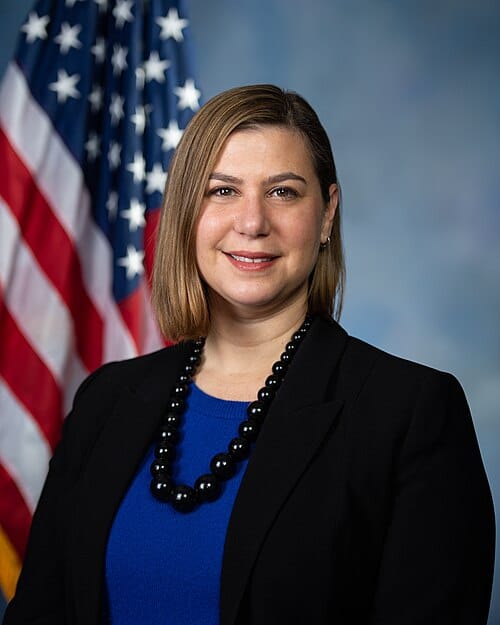
Earlier this year Michigan Senator and former member of the CIA Elissa Slotkin championed a new 'war plan' for the Democratic party in the face of the Republican attack on civil liberties and government apparatus. The premise of this plan was simple: appropriate the rhetoric and tactics of the right; in her own words, Democrats must "retake the flag" and find some of their own "Alpha energy," effectively proposing to usurp Republicans as the premier jingoists in the room. With a Republican father, a Democratic mother, and a professed love for both, Slotkin's entire identity is built on bipartisan compromise. Further complicating this foundation is her position within a battleground state. This background, though, creates a massive blindspot: an overt inability to identify the asymmetry that forecloses on any feasibility of such a tactic.
This proposed strategy mirrors the failures of the 2024 Democratic presidential campaign. Kamala Harris pivoted from calling the Republicans "weird" and offering material policy proposals on price gouging and reproductive rights straight into building bridges with Liz Cheney and creating tent space for moderate Republicans. Hillary Clinton touted moderately progressive stances on civil and economic policy, but portrayed herself as a champion of American exceptionalism and created as much distance as she could between her and her central primary opponent, Bernie Sanders. Even more recently in the midst of Zohran Mamdani's popularity, many Democrats stood behind Andrew Cuomo up until the night of the primary, despite his failed governorship and sex pest history. In all these cases, a pattern emerges: Democrats can identify the symptoms of Republican success, but they remain unaware of the counter-hegemonic disease behind it.
Consider the part of Slotkin's 'war plan' where she urges Democrats to stop using the words 'oligarchy' or 'woke' because focus groups tested low on it and therefore concluded on a low resonance for the language among voters. This is the quintessential folly of mistaking the map for the terrain. She identified a data point – 'voters don't care about this word' – and then assumed that was the only possible state of affairs. No imperative to persuade voters or define it for them or to even make a case against oligarchy itself, just submission to the field as it stands. Republicans, on the other hand, have no qualms with defining words for their constituents. Whether it's 'political correctness,' 'affirmative action,' 'woke,' 'CRT,' or 'DEI,' conservative politicians, pundits, and commentators are relentlessly willing to step up to the plate. They've successfully embedded dehumanizing terms like 'illegal' and 'terrorist' as the default vocabulary of immigration and foreign policy. This discrepancy should make the problem clear to anyone with an ounce of political will: in every lane where Democrats cede ground out of their managerial fears, Republicans are more than willing to seize it with conviction.
And this is more than just a strategic failure.
Adam Jentleson's think tank The Searchlight Institute has effectively built their entire strategic framework off of this very same epistemic error. Searchlight first came into sight in 2023 as the tactical machinery for a proposed post-woke Democratic Party. Ever since, Jentleson and gang have written countless thinkpieces on how Democrats should be adhering to polling data instead of making waves. Like in this September article on Climate Change where the thesis is effectively, "the only way to save the climate is to stop talking about it." Never mind the disturbing parallel to the mantra that "the only way to end racism is to stop talking about race," the Searchlight crew observes a 50-point gap on climate change and treats it as an immutable law of nature instead of an opportunity for political mobilization. The conclusion is foregone: despite the existential threat and ethical imperative, and despite Republicans actively creating space for oil conglomerates (and even the crypto industry), the only way forward is unilateral disarmament; stop talking about the climate.

And this strategy is already ethically bankrupt before the realization that they won't even align with polling data if it ruffles the donor class. Biden is on record vowing to veto Medicare for All despite the popularity of the policy. While support for reproductive rights only grows, no serious effort was ever mounted to enshrine access to abortion during Democratic control. And despite overwhelming disapproval of Israel's actions from Democratic voters, party leaders like Hakeem Jeffries and Chuck Schumer refuse to relent on their own Zionist positions. It should come as no surprise that both Jentleson and Slotkin are staunch supporters of Israel. This reveals the ultimate function of traditional intellectuals like Jentleson: to weaponize data not to identify gaps and opportunities, but to legitimize the very wishes and desires of the professional-managerial class and obscure the mechanisms of power in the process. The only alternative to this cynical reading would be profound ignorance on behalf of partisan intellectuals.
The Ta-Nehisi Coates of it All
The capstone on Ezra Klein's recent apology tour – if one could even scavenge an apology from the wreckage of his position – was his recent interview with Ta-Nehisi Coates. Much of the interview predictably centers on the core problem we can readily observe in the post-Kirk discourse: what is considered political violence?
As ex-academic philosopher and YouTuber Michael Burns astutely observed, Ezra Klein sees politics as a spectator sport, first and foremost. He consistently speaks in terms of winners and losers, how to consolidate power, and how ethical concerns are secondary to the political process – all devoid of the harm generated in the process. This is fully in-line with our analysis of Elissa Slotkin and Adam Jentleson who, in their own ways, propose to first play the polling game and then deliver material change for those who need it. The primary issue – that this is rooted in status quo maintenance instead of any discrete future recompense – has already been demonstrated. But the deeper, moral fatal flaw with Klein's position is that it is utterly ahistorical. This isn't a new way to play the game with a new set of future promises; this is the very internal mechanism of our political system that has played out since long before Klein was born. The New Deal is a prime example of the kind of fallout this political game enacts.
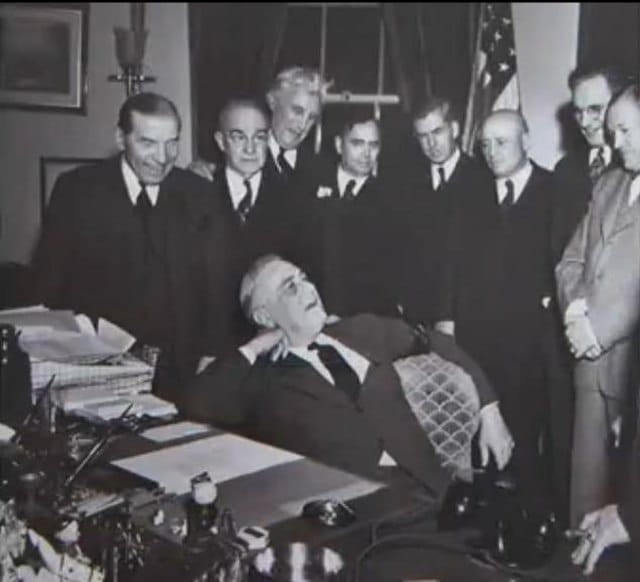
In the throes of the Great Depression, faced with overwhelming unrest from capitalist failures, President Franklin Delano Roosevelt embarked on a specific mission. To listen to its modern harbingers, the New Deal was a socialist-adjacent project meant to lift Americans from an economic quagmire. But one need only examine FDR's concessions to the Southern Dixiecrats to understand a starker truth: the New Deal was, before anything else, a project to save capitalism.
In order to shove his policy proposals through, FDR made numerous concessions. He and the Northern Democrats had to exclude agricultural and domestic workers. This meant nobody working in the fields had access to pensions, unemployment insurance, or minimum wage protections. It should come as no surprise that this group was over two-thirds black. The implementation in the South was also relegated to local agencies, surrendering discretion to racist and classist sentiment. While FDR publicly lambasted racist poll taxes and lynching, his policies left these largely intact in the South. But even beyond what FDR failed to dismantle through the New Deal, he and his administration even implemented what is now the most accessible demonstration of generational racism – redlining.
Yet modern discourse consistently fails to reconcile these two faces of the New Deal: the one that helped construct a white middle class, and one that explicitly institutionalized black exploitation. And the consequences are felt by black people today.
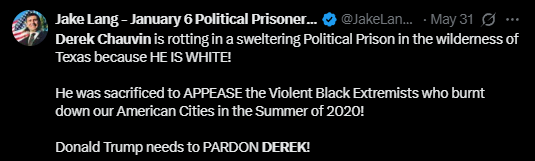
Ta-Nehisi Coates is clear in the Klein interview: political violence is the black experience. The lineage is clear. The state-sanctioned disenfranchisement of black people in the 1930s laid the foundations for modern American institutions. We celebrate the white CEO while pathologizing the black casualties of policing. When George Floyd was choked to death, he was relentlessly demonized; the resulting protests were condemned as race riots while his murderer is now called a political prisoner. Trayvon Martin was shot and murdered for wearing a hoodie and his killer became a folk hero of the right. It's barely been a week since Trey Reed was found lynched in Cleveland, Mississipi, and while police were quick to rule out foul play, it's being reported that an independent autopsy has ruled out suicide. This is the unmet promise of the New Deal: a system that violently constructs and maintains an underclass of black people.
This is also the sport that Ezra Klein proposes we continue playing, and black people are not the only victims. While Klein champions political gamesmanship, immigrants, Muslims, and trans folks are being sacrificed to the altar of debates over mass deportation, Israel's right to exist, and the legitimacy of gendered sports. He sees civil debate as a solution for these issues instead of part and parcel of the very same mechanisms.
And Twitter conservatives and the anti-woke crowd were all too happy to play ball. If there was one common refrain following the interview, it was that moderate liberals and reactionaries found alignment in denouncing Coates, further validating the ivory tower perspective of politics.
A Duty to Persuasion
The undergirding assumption of this entire worldview is that of its capacity to persuade. That by facilitating civility, neutrality, and dispassionate engagement, we can persuade our interlocutors of an ethical imperative. The error, here, is that modern debate is, first and foremost, a competition. When Michael Burns calls Ezra Klein's view of politics a 'spectator sport,' he's being literal: the goal is to win, not discover anything close to truth. And while this may be the genuine intent of liberal intellectuals, this is catastrophically naive when facing an opponent who flatly admits he's a fascist. As the adage goes, "you can't reason someone out of a position they didn't reason themselves into." This is more than a platitude – it reveals a core truth. True persuasion doesn't happen in the outcome of combat, but through the painstakingly deliberate effort to construct a new logic, something for which the debate stage is the worst imaginable tool.
So if not through debate, how do we persuade people to care about the well-being of others? The hate and xenophobia demonstrated by MAGA is abhorrent, but it stems from a very real sense of economic and political disenfranchisement, from a distinct loss of agency. A politics that can't speak to this loss – a politics of managed decline – will only ever lose to a promise of restoration.
To convince others of our values, then, we must first model those values. The conservative dogwhistle of 'virtue signalling' stings because it contains a kernel of truth – liberal policy routinely fails to materially produce the values it rhetorically champions. What conclusion is an independent voter supposed to draw in the face of fascism when liberals offer, at best, a nearly century-old framework built on the racism they claim to oppose, and at worse, a managerial refusal to address its generational fallout? A Republican voting for Trump is not an individual moral failure, but the natural systemic conclusion of a political framework that routinely fails to engage with the harm it generates.
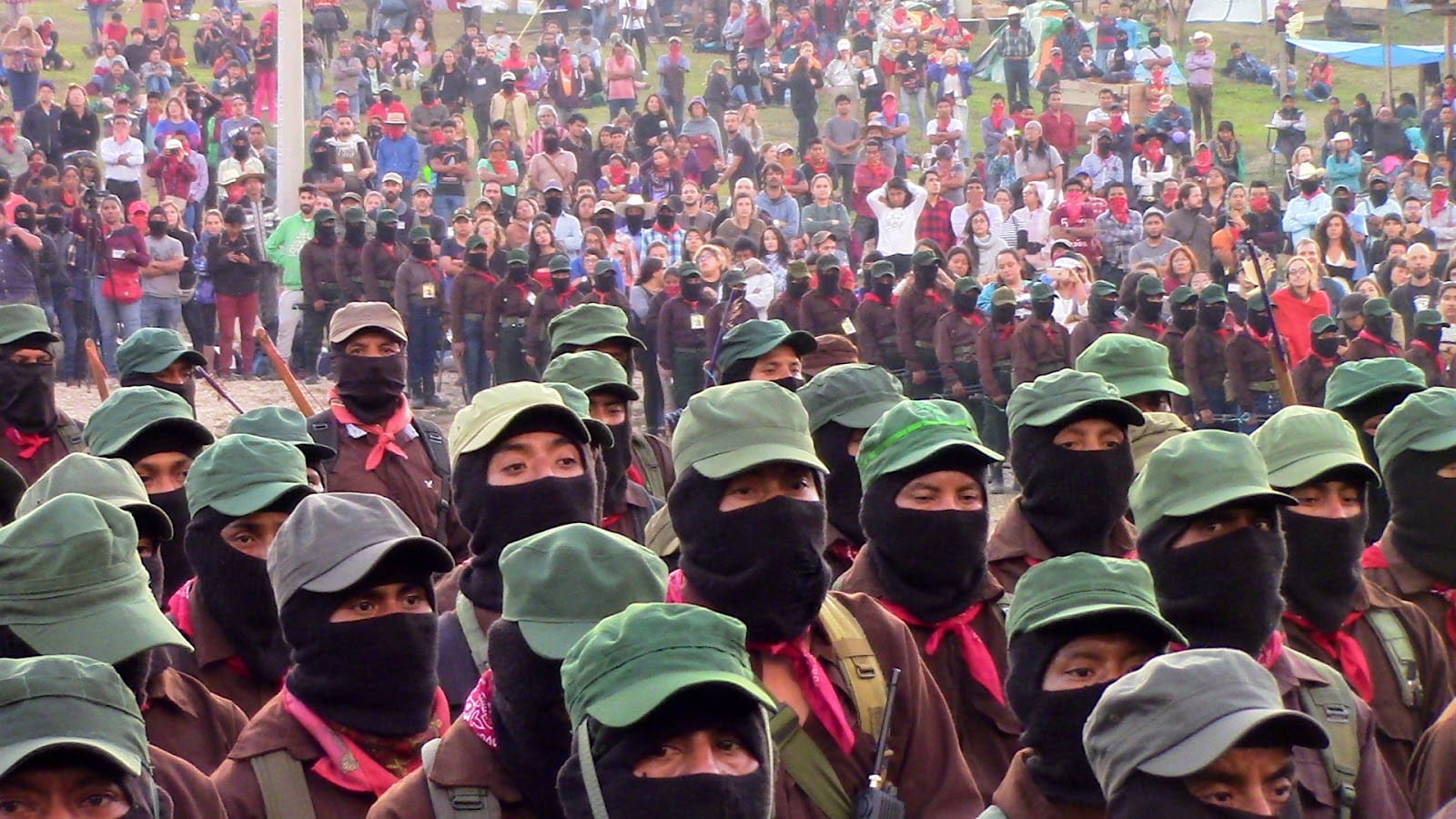
To model values of care, equity and well-being, we have to dispatch with both the assumption that the work is finished and the conclusion that no more can be done. When Elissa Slotkin tells us not to say "oligarchy," when Adam Jentleson tells us that the only way to save climate change is by not talking about it, when Ezra Klein says that Charlie Kirk does politics the right way – this is as loud and clear as the day Margaret Thatcher said "There Is No Alternative." It's nothing more than magical thinking. In essence, being able to demonstrate the values we proclaim means abandoning procedural fetishism. We can't be faithful to a system that continues to produce the suffering and oppression of others on the belief that it may one day stop producing these things. We have to have the political and humanitarian imagination to be able to say, "there's a better way of doing this." We have to start prioritizing the dignity and agency of every person – starting with the marginalized – over the preservation of capital and power.
We have to show bravery where FDR showed cowardice.
To start making the world a better place means to stop letting the Ezra Kleins of the world get in the way, and to start making the case for a better world.