
Saving the Queers: On Colonial Projects

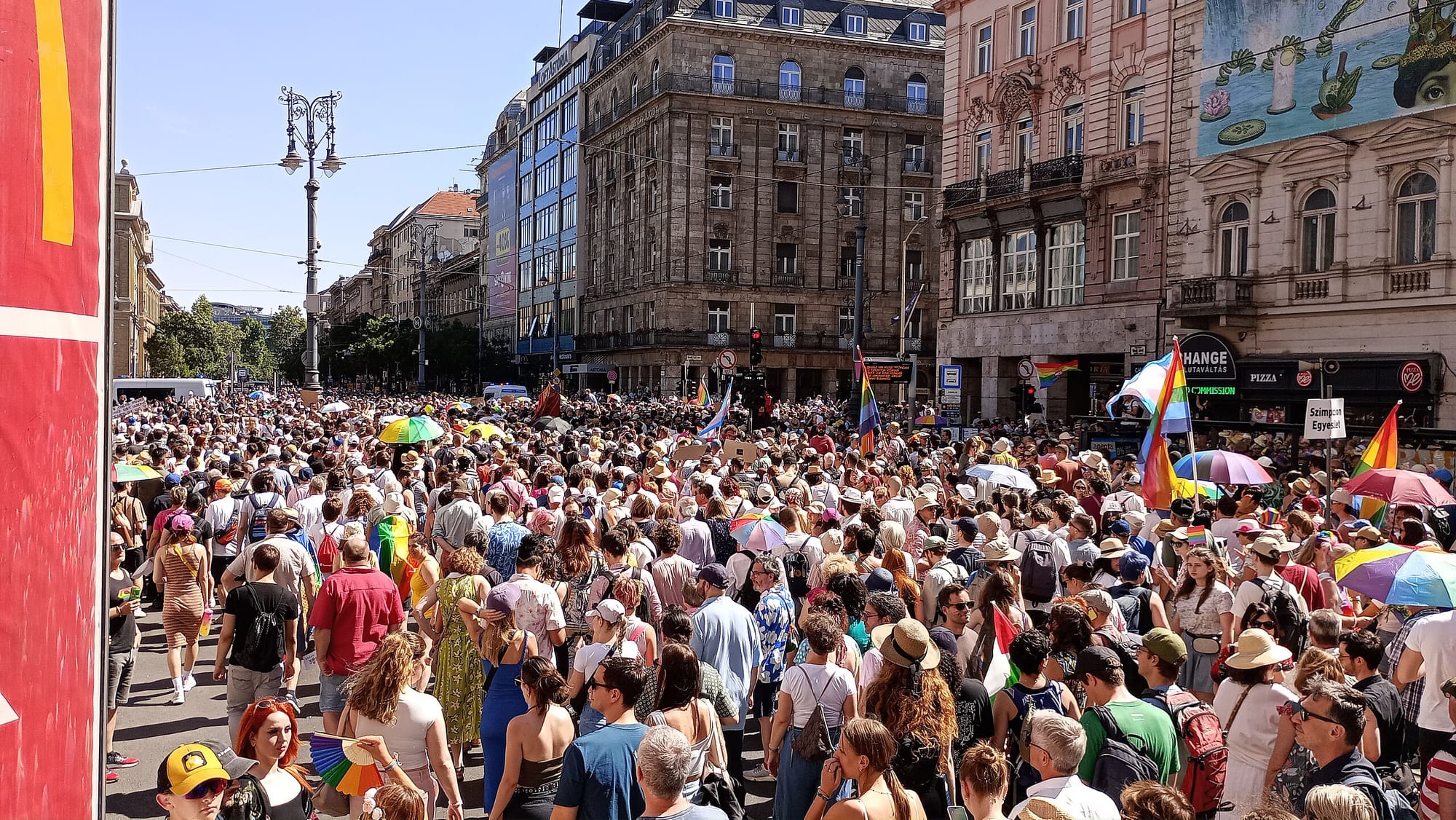
Budapest's 2025 Pride Parade — a historic turnout for queer liberation in the face of an illiberal, repressive government. This is a clear example of self-determination winning out against explicit attacks on marginalized groups.
Hundreds of thousands of people showed up for the pride event in Hungary's capital following aggressive anti-LGBT legislation.
Why do gay people love Tel Aviv?
One could start by looking at the resorts, the beaches, or the vibrant nightlife. Tel Aviv is the gay destination in the Middle East, according to Israel. It's estimated that 25% of Tel Aviv's population is gay. They've got outdoor gyms, their own version of Grindr called Atraf, and even what The Times of Israel has dubbed a "gay porn kingpin". But this relentless presentation of a state-sponsored gay utopia raises the question: what is our attention being drawn away from?
The idea that a full quarter of Tel Aviv is queer is an official estimate seemingly unbacked by solid data. In fact, search result after search result will yield the 25% figure from various queer and/or Israeli publications with absolutely no citations. There is some data for Israel's queer population as a whole (somewhere around 7% nationwide), but these studies rely primarily on self-reporting through online platforms, and have nothing as granular as Tel Aviv's queer population. Even the famously-gay Castro district in San Francisco is only somewhere between 15-20% queer.
Equally as strange is how Tel Aviv is called the "gay capital" of the Middle East (sometimes even the world) with a population just shy of half a million. It'd be like calling Washington D.C. (with a verified queer population of roughly 14%) the gay capital of the U.S. – a claim that would seem absurd on its face, if for no other reason than it ignores the lived reality of queer people elsewhere. To point, the narrative of Tel Aviv's gayness seems to be, well, a narrative, repeated over and over again by fluff pieces and personal anecdote. The narrative in question is textbook pinkwashing, or the effort to deflect national criticism by using a theoretical progressivism as a facade.
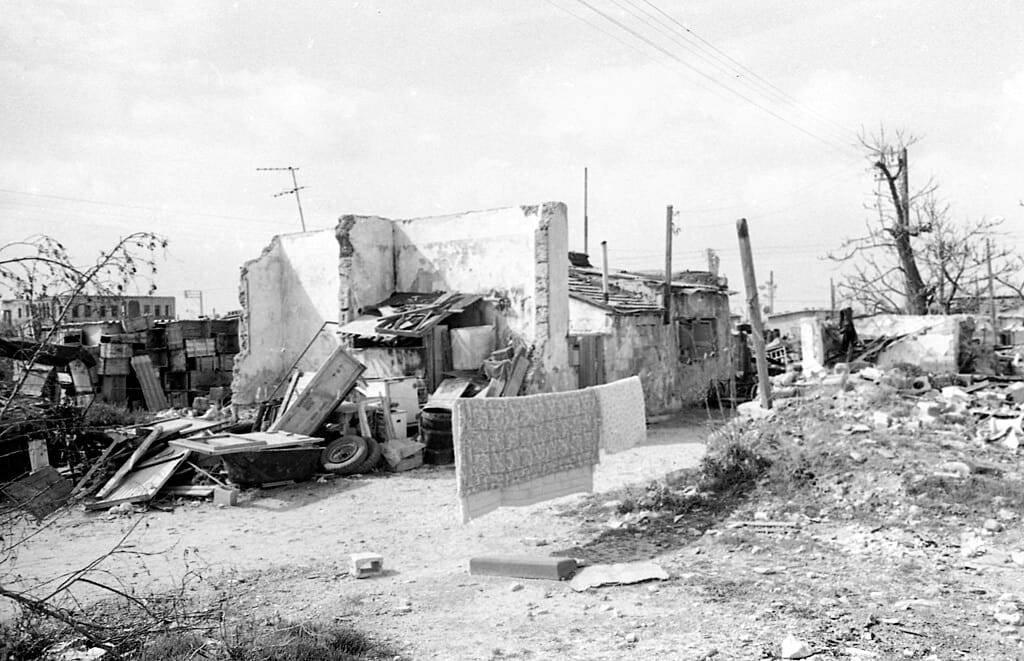
The picture of a gay Israel only gets bleaker when you examine the continued legal struggles queer Israelis face as they fail to even get gay marriage through the gate or the overt racism faced by queer Palestinians inside of Israel. While Israel touts advances for gay Israelis, many of these seem to be extractive in nature. The fact that they allow gay and trans people to serve in the IDF seems progressive only if you ignore their universal conscription and constant need for manpower, with some estimating shortfalls of tens of thousands of soldiers. Yes, they allow gay people to donate blood, but this is a medical imperative before it's liberatory. And while defenders of Israel will point out that foreign gay marriages are still recognized, this ignores the larger reality that marriage within Israel is a religious institution deliberately withheld from its own queer citizens. While gender care is legalized, there are still many practical barriers, like limited surgeons and severe medical gatekeeping. This is "separate but equal" with a Levantine twist – granting specific rights (that are often beneficial to the state) while withholding fundamental civil recognitions.
There's an even starker kind of irony, however, in propping up Israel as a force for queer liberation when you consider the material conditions of Palestine and the policies that shaped them. The Likud has deliberately bolstered a Hamas government. These efforts include Netanyahu's tacit endorsement of Qatari funding, a decades-long blockade, and the illegalization of Palestinian political activity. This has systematically undermined the possibility of a stable, secular, socially democratic government and has left queer Palestinians vulnerable. And this is all before considering that queer Palestinians are already the collateral damage of the IDF – to argue otherwise would be to invalidate the identity and suffering of queer Palestinians. This makes the Israeli tut-tutting of the Hamas regime's homophobia obviously cynical. No matter how gay-friendly Israel may or may not be, they are generating incredible amounts of harm for queer communities outside their walls.
This is the complete picture: Israel has rigged the system against queer Palestinians, has failed to consistently deliver for queer Israelis, and has manufactured an image of a gay Israel – based essentially on vibes – to deflect criticism from the reality of occupation and systemic inequality. The question isn't whether Tel Aviv has a pride parade or gay bars, but who is ultimately benefitting from the portrait of a gay-friendly Israel.
So where else might one see the behavior of co-opting the veneer of liberation to self-interested ends?
"We're Here to Help"
Consider the Cold War, the protracted US effort to combat global communism. An accessible narrative in the US during the Cold War was that of Domino Theory. The idea was very simple: if one nation "falls" to Communism, then adjacent countries will also "fall" to Communism. Specifically, US officials saw the Soviet influence over Eastern European countries following World War II as a "Soviet Bloc" and concluded the same series of events would play out in Southeast Asia. When Mao Zedong took control of China in 1949, this fear was materialized. Proponents of Domino Theory suggested that Korea, Vietnam, Laos, and Cambodia, among others, would simply fall in line. When Ho Chi Minh took control of North Vietnam against French colonial control, the US tried to build an anti-Communist client state in southern Vietnam. Their attempts at establishing a regime sabotaged the self-determination of the Vietnamese and were wildly unpopular, ultimately ignoring decolonial sentiments. So in the midst of these failures, the US did what it has always done best: it manufactured a strategic and moral pretense for war.
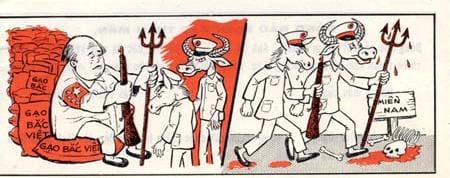
The problems with this entire sequence are many, but perhaps the most glaring is the difference between the Soviet Bloc and Southeast Asia. The Eastern European countries in the Warsaw Pact – like Bulgaria, Czechoslovakia, and Poland – did not organically turn to communism. The Soviet Union aggressively installed their own control in Eastern Europe as they pushed back Nazi forces. It was in no way a domino effect, but a campaign. This mechanism simply did not exist in Southeast Asia. While it's true that China has a history of aggressive expansionism, there was no Nazi analogue for them to push back, and nationalist sentiments within Southeast Asian countries were not well-understood by the US. In other words, the entire idea of the region turning into its own Communist Bloc was baseless. The toll for this lesson was three million Vietnamese lives and tens of thousands of American soldiers.
But while Domino Theory provided a public, politically compelling rationale for intervention in Southeast Asia, this obscured the material reasons for the US being on the ground. Losing countries to communism didn't just represent an ideological failure – it represented a market loss. Nationalized industry abroad necessarily meant elbowing capitalist markets out of the bid. For Southeast Asia, this meant losing at least some access to materials like rubber, sulfur, or tin. Vietnam specifically was also crucial for control of the shipping lane through the South China Sea. The public narratives surrounding communism were ideological, but the US (and other Western countries) had a vested material interest in inducting these nations into a capitalist global hegemony.
This is the praxis of US foreign policy and a broader exercise in manufactured consent: present an accessible, public-facing pretext while smuggling in national strategic interests. We saw this play out in the aftermath of 9/11, where President Bush launched a full-scale invasion of Afghanistan within a month of the terror attack – well before any meaningful deliberations could take place. The message was clear: the Taliban are terrorists, they hurt us, we need to retaliate. It was nothing short of a fait accompli. The public reason would later turn into that of liberation. But the "smuggled" interests here were those of reinforcing US hegemony. Invading Afghanistan meant asserting US dominance in the face of national tragedy, imposing order into the so-called backwaters of the world. It also presented long-term capitalist opportunities in the form of resource extraction and injecting the US into Central Asia. The effort ended in a catastrophic withdrawal under Biden's adminstration – a withdrawal previously promised under both Trump and Obama – and the death toll was hundreds of thousands.
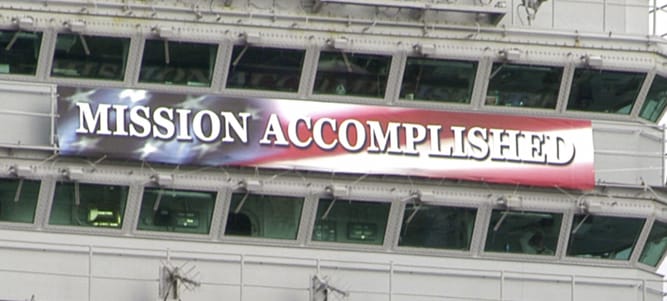
And then there's Iraq.
Where Vietnam and Afghanistan had – at least initially – a compelling (if flawed) public narrative, the justification for invading Iraq in 2003 was so transparent, so weak, so ethically dubious as to stretch this already-fraught praxis to its absolute limit. The manufactured consent was in overdrive here: invent the WMDs for the capital interests of oil conglomerates and defense contractors. And yet the move was widely supported by Americans. In the months following the invasion, public support rose above 70%. When no WMDs were found, the narrative predictably shifted to liberation, and support began a glacial retreat. As many as 36% of Americans in 2023 still felt the invasion was justified even in hindsight. There is no exact number on how many people have died as a result of the Iraq War, but estimates range from hundreds of thousands to over a million.
This is the power of pretense and the cost of intervention. But will we keep falling for it?
Homophobia and Western Colonialism
This same praxis is now playing out in a new theater: Africa. On September 2nd, 2025 Burkina Faso criminalized same-sex relations. The domestic liberal response was generally that of moral outrage or condemnation. To be clear, this criminalization does represent an assault on human agency and thriving. The problem is, the US has a storied history of using moral outrage as a pretense for intervention. Many armchair activists took to social media to decry the Burkinabe government as barbaric. Even as imperialist alarm bells were being rung, there was a common refrain: what's wrong with calling out an awful law? The question is, when does the passive outrage of well-intentioned individuals in the world's largest Western empire turn into yet another intervention? That answer probably doesn't look altogether distinct from that of Vietnam, Afghanistan, or Iraq.
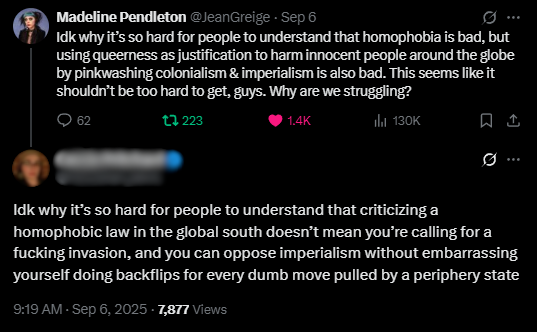
Perhaps more importantly is that this outrage ignores historical European colonialism and contemporary theological imports.
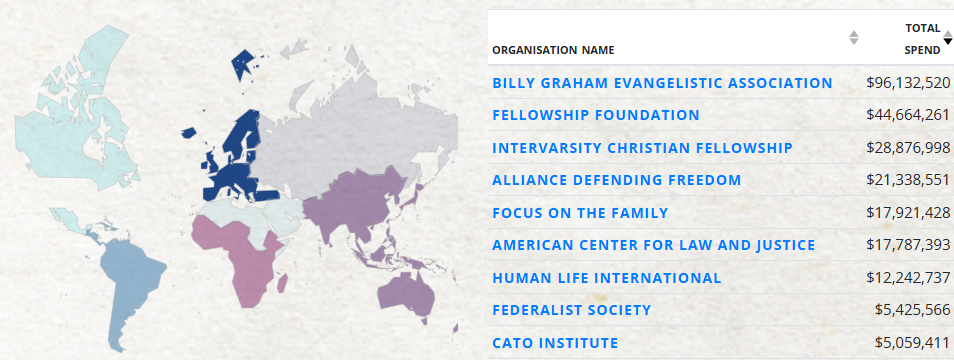
Take Uganda. They passed their Anti-Homosexuality Act in 2023, but this didn't happen in a vacuum. US-based evangelical groups spent over $50 million dollars in Uganda between 2007 and 2020 with the explicit purpose of influencing policy. In case there's any doubt what this policy was, the 3-day Kampala conference in 2009 was an opportunity for these evangelicals to make their case against homosexuality as an evil Western agenda.
Following the passage of the act, Uganda received swift international backlash. The thing about international backlash is that it actively worsens material conditions within the countries receiving backlash. Ugandan officials used this Western moralization to strengthen homophobic sentiments: homosexuality is a problem of the west, so the backlash was proof of the efficacy of this crackdown. This kind of outrage is morally abstract, and rarely acknowledges the concrete damage it causes.
Evangelical intervention in Africa has manufactured its own Domino Theory – not organically, but through deliberate manipulation originating right here in the US. Family Watch International (designated a 'hate group' by the Southern Poverty Law Center) is an evangelical group intent on spreading anti-gay sentiment in African countries, like Uganda. World Congress of Families is another such group that likely exacerbated anti-gay sentiment in countries like Ghana. There are, in fact, at least 20 of these groups active in Africa. Even if they aren't directly shaping the policy of every African country, their ideas and funding proliferate through transnational networks, laundered through local churches and government officials, rebranding this bigotry as African sovereignty.
This erases not only the contemporary exporting of injustice, but the historical colonialism that created the robust foundation ready to receive that injustice. As England colonized African countries in the 19th centuries, those countries inherited their anti-sodomy laws. Although France did not strictly have anti-sodomy laws, French-colonized countries would go on to adopt their own. And there is evidence that many African cultures had sexual and gender fluidity prior to colonization, like precolonial Egypt or Congo.
The moralization on behalf of the Western world, then, is a deep irony that fails to acknowledge these human rights abuses as a domestic product. It patronizes an entire continent where we have consistently intervened against their own self-determination. Whether it's military, economic, or cultural, US intervention rides on our own outrage to cause profound harms abroad.
Material Solidarity in the Global South
So do we just abandon queer communities in these countries?
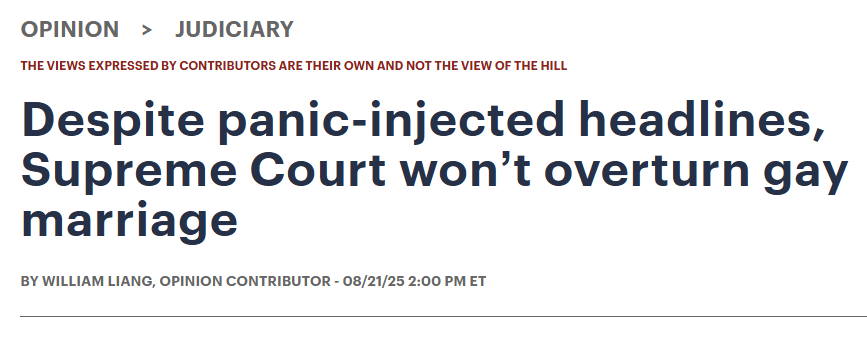
It's first important to realize that abandoning queer communities is already the status quo, Africa or elsewhere. It would only take a strategic interest in Burkinabe gold for the US government to directly intervene there – their same-sex criminalization provides a resonant pretense. The moral imperative here is that our own misgivings of policy abroad simply do not constitute solidarity, especially when we have consistently failed to deliver for queer communities here in the US. Republicans are readily espousing violently transphobic rhetoric without challenge. The idea of overturning Obergefell is all but a nervous joke now. And to listen to Democratic officials might leave you with the idea that we've actually focused too much on queer rights here in the States.
But second, no, abandoning queer communities isn't the answer. There is a path to real solidarity here, but the work is hard and requires challenging our own preconceptions of how the world looks right now and how it could look tomorrow. If top-down, neoliberal enforcement only makes things worse for marginalized groups, then the answer lies in bottom-up, material efforts.
The absolute bare minimum here is to trust other countries with their own self-determination. If nothing else, it should be crystal clear that condemnation, policy tinkering, and direct intervention have led to disastrous outcomes abroad. The US and its citizens are not the saviors of the world. Your personal outrage will not reach the ears of Burkinabe officials, but it might reach the ears of your representatives, who can only make things worse. Budapest's 2025 Queer Pride Parade showed record turnout in response to Viktor Orban's legal crackdown on the queer community in Hungary. Post-apartheid South Africa produced some of the most robust LGBTQ+ protections in the world without any help from Western countries by recognizing that the fight against bigotry means freedom for everybody. Self-determination can and does protect marginalized groups far more effectively than any intervention ever could.
The next step, then, would be modeling solidarity domestically. This isn't a call for us to "clean our room," but rather highlighting how much harm is generated by our own inability to dismantle hegemony. Evangelical exports happen because homophobia is first a useful tool for power here. It is not only financially lucrative, but also plays into Biblical dominionism – the effort to bring the world to the Christian faith. Dismantling homophobia and transphobia here in the states cripples that structure and also provides a model for what internal solidarity looks like. In essence, we can dispatch with the finger-wagging and pearl-clutching and become a beacon for queer solidarity.
The most direct solidarity, however, would be to boost African voices online, whether that's on Twitter or Instagram. To educate yourself about interventionism and colonialism and understand how harmful policies are shaped in the countries we are often so quick to condemn. The needs of Ugandans will be different than the needs of Burkinabe, and both will have needs that often go unspoken. And most importantly, to remove yourself from the equation. The only answer to systemic problems is systemic solutions.
Anything less is abandonment by any other name.